
Recently, the Guangxi Luchuan Wind Power Operation and Maintenance Project, managed by the company, has achieved a breakthrough in cost reduction and efficiency improvement by implementing an 'early intervention mechanism for sub-health conditions' and 'innovative refined management of on-site power consumption.' This approach ensures stable turbine operation, minimizes operational losses, and provides valuable practical insights for optimizing mountain wind farm operations.
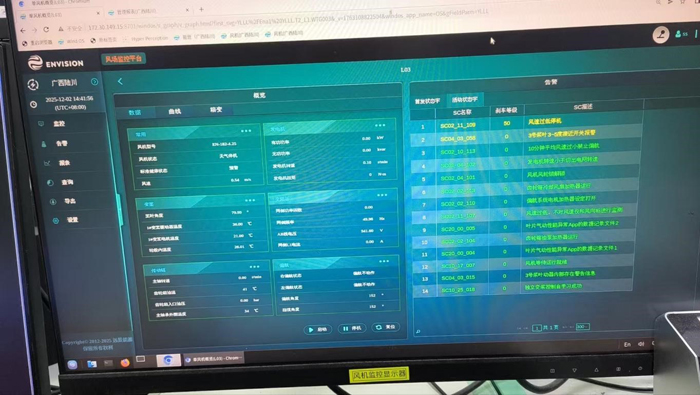
To address potential risks in core wind farm equipment, the Luchuan Project Department has established a "sub-health monitoring + timely intervention" prevention system. By installing high-precision sensors on critical components like gearboxes, generators, and main shafts, the system continuously monitors subtle parameters such as vibration frequency, temperature fluctuations, and operational noise. Combined with intelligent analysis models, it accurately identifies equipment in a "sub-health" state—early signals indicating parameters have deviated from normal ranges but before faults occur—thereby breaking the traditional passive approach of "reacting only after failures manifest."
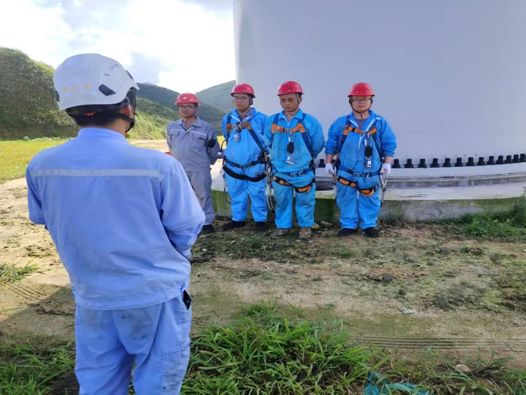
Upon detecting sub-health signals, the wind farm immediately initiates a specialized response protocol. The project team utilizes the equipment operation database to swiftly identify the root causes of abnormal parameters. Through on-site inspections, they conduct thorough component checks and develop targeted interventions—such as adjusting lubrication system parameters, removing accumulated dust, and tightening loose connections. These timely and precise measures effectively eliminate potential hazards at the initial stage, preventing sub-health conditions from escalating into major failures. This approach not only reduces maintenance costs but also ensures continuous stable operation of the turbines, thereby avoiding power generation losses caused by equipment downtime.
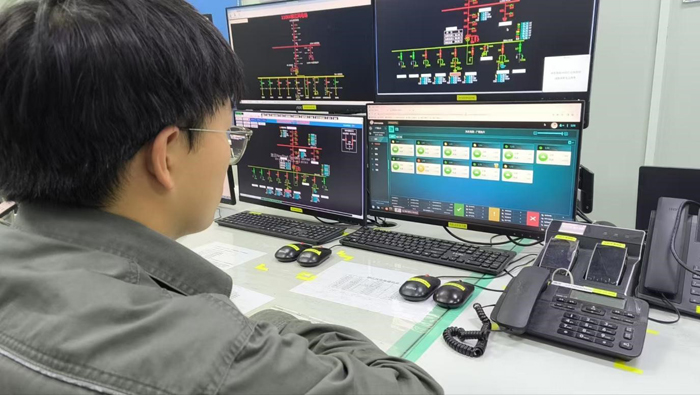
To reduce on-site electricity consumption, the Luchuan Project Department implemented refined management by establishing an intelligent power management platform. This system enables real-time monitoring of power usage across all zones—including office areas, maintenance workshops, and living facilities—along with equipment such as fan control systems, lighting, and ventilation. Based on these data, the wind farm developed dynamic power optimization strategies. During off-peak hours like nighttime, it optimized power usage in office and living areas through time-of-use electricity pricing and idle power disconnection. For instance, office equipment automatically enters energy-saving standby mode during non-working periods, while public area lighting intelligently activates or deactivates based on occupancy. Through comprehensive, round-the-clock power optimization, the on-site electricity consumption was significantly reduced, further lowering the wind farm's overall operational costs and injecting new momentum into economic efficiency.
Moving forward, the Luchuan Wind Power Operation and Maintenance Project Department will further refine its "sub-health prevention mechanism and optimized power consumption control model", while continuously exploring green and efficient operational approaches to drive wind farms toward greater breakthroughs in cost reduction, efficiency enhancement, and sustainable development.